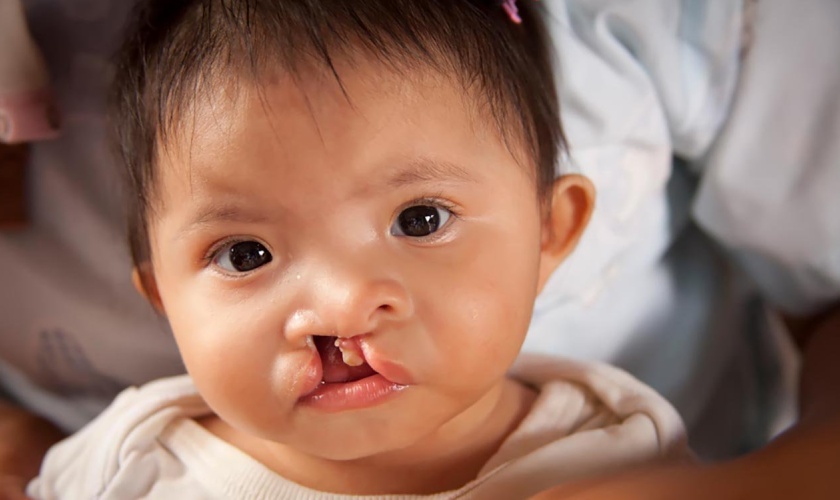
In theory, surgery can be performed at any time after birth. However, the appropriate time for surgery depends on the patient's health, anesthesia ability, and conditions, the cooperation of the family, etc. Lip surgery is usually performed on children from 3 months of age, weighing 5 kg or more. Pharynx surgery for children 12-18 months, weighing 10 kg or more.
Pediatrician Dr. Nguyen Minh Hang, deputy head of Odonto-stomatology faculty, Children's Hospital No. 1 (HCMC) give some advice about caring for patients with cleft lip and palate.
During pregnancy, when ultrasound detects fetus with cleft lip-palate, the mother should be advised carefully. In the facial area, it is recommended to keep the fetus as it is the mildest birth defects in all birth defects, with just plastic surgery, children will acquire function and cosmetic to integrate with the community.
After the birth, mothers should be instructed on baby care. Do not worry too much as some babies can still breastfeed as normal. If the gap was too wide making breastfeed impossible, then it is best to buy specialized milk bottles for cleft lip-palate patients, extracting breast milk into the bottle for feeding.
A week before surgery, it is best to stop breastfeeding, bottle and train the children to drink with a spoon, giving them the habit so that after surgery, they will be more adaptable.
After surgery:
Keep your children from falling. Keep monitoring them, if there is any bleeding, fever or shortened breath, report to the doctor or nurse immediately. Many children after surgery are not adapted to the new airway, affected by anesthesia so not fully awake and tend to scamper around, crying. At this time the anesthesia wore off so the child more likely to experiencing pain, bleeding.
Give your children medication prescribed by the doctor to relieve pain, which will allow them to sleep quietly, reduce bleeding and rapid recovery.
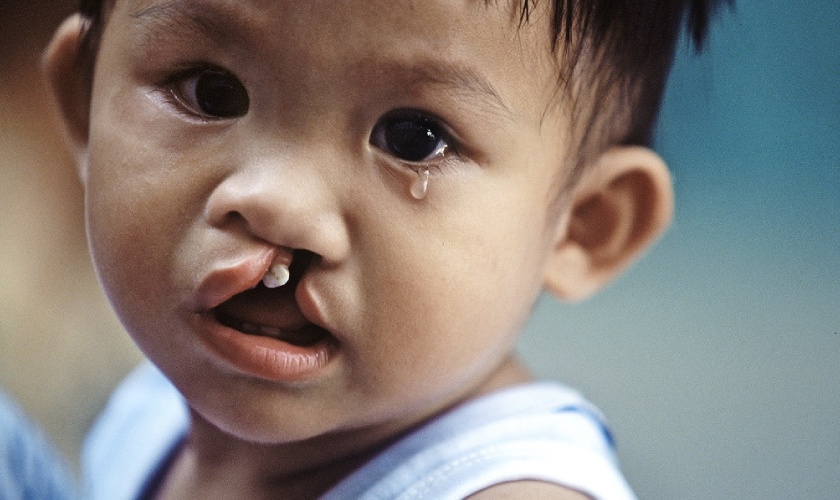
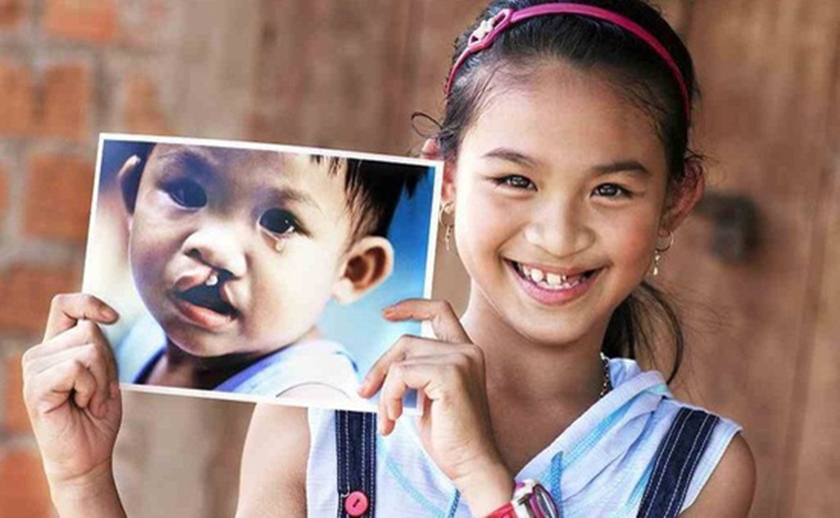
Cleft lip-palate is a birth defect that gives children many difficulties in daily life

After surgery, the wound is often painful while during the healing process, it will be itchy, so take care not to let them fall, avoid collisions. Especially, do not let them put their hands or hard objects, toys in the mouth.
For lip wounds: keep the wound as dry as possible. Bandages help to reduce swelling, reduce bleeding and pain. But if the bandage is wet (due to a runny nose, milk, food or water), it can make the wound more susceptible to infection. Therefore, if the bandage is wet, report immediately to wash the wound and change the bandage.
For pharynx wounds: avoid hard foods, holding sharp objects or toys in the mouth so as not to affect the incision.
The first week after feeding milk by spoon, without breastfeeding or bottle-feeding, children can drink smoothies, congee or diluted soup. For very young children, it is important to extract breast milk and feed it with a spoon.
In the second week after the operation, besides the food of the first week, you can feed the baby porridge with nutrients from meat, fish, eggs, vegetables, tubers, fruit, etc.
3 -4 weeks after the operation, you can feed the children soft rice or crushed rice.
After a month since surgery, they can eat as normally as children of the same age.
Note that after the surgery, the child is not familiar with the newly formed lips so eating, breastfeeding, speaking should be slowly trained. Swelling wound and pain after surgery are completely normal, so parents do not have to worry too much. All will be okay when the child started to eat normally after a month.
According to VnExpress.net